Coastal Synchrony
Data-Driven Generative Art Installation for Wellbeing
Concept
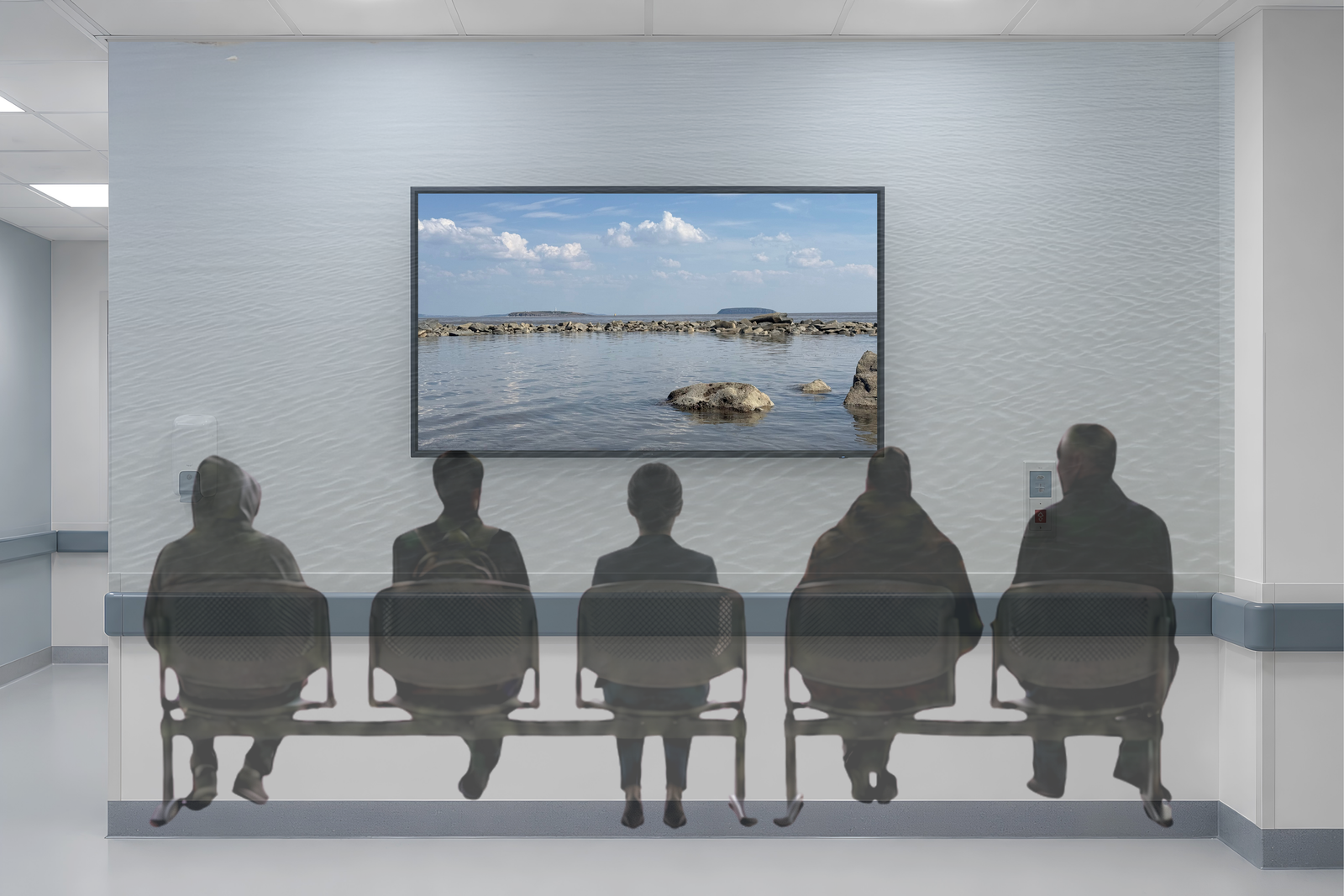
This project sits at the intersection of data-driven art practice, empirical aesthetics, and arts in health, bringing together live environmental data, psychology research, and computational visual practice to produce a continuously evolving mixed-media coastal landscape for hospital environments within South Wales.
At the heart of the project is an idea about breaking down the boundary between institution and environment. Hospitals are sealed spaces — climate controlled, artificially lit, cut off from the rhythms of the outside world. Time can feel warped; minutes stretch, days blur, and normal markers of passing time can disappear when in an anxious or worried state.
This project reintroduces those temporal rhythms using live tidal, meteorological and lunar data from the Penarth coastal monitoring station under the National Network of Regional Coastal Monitoring Programme (NNRCMP) to bring the natural world inside hospital walls, translated into a slowly shifting visual landscape.
Research Methods
Practice based research
- Using different conceptual/theoretical approaches e.g., prototype-led design to build and drive the visuals using live tidal and weather data.
- Secondary research into relevant design and art practices and projects to inform current practice.
Psychology/User Experience (UX) based research
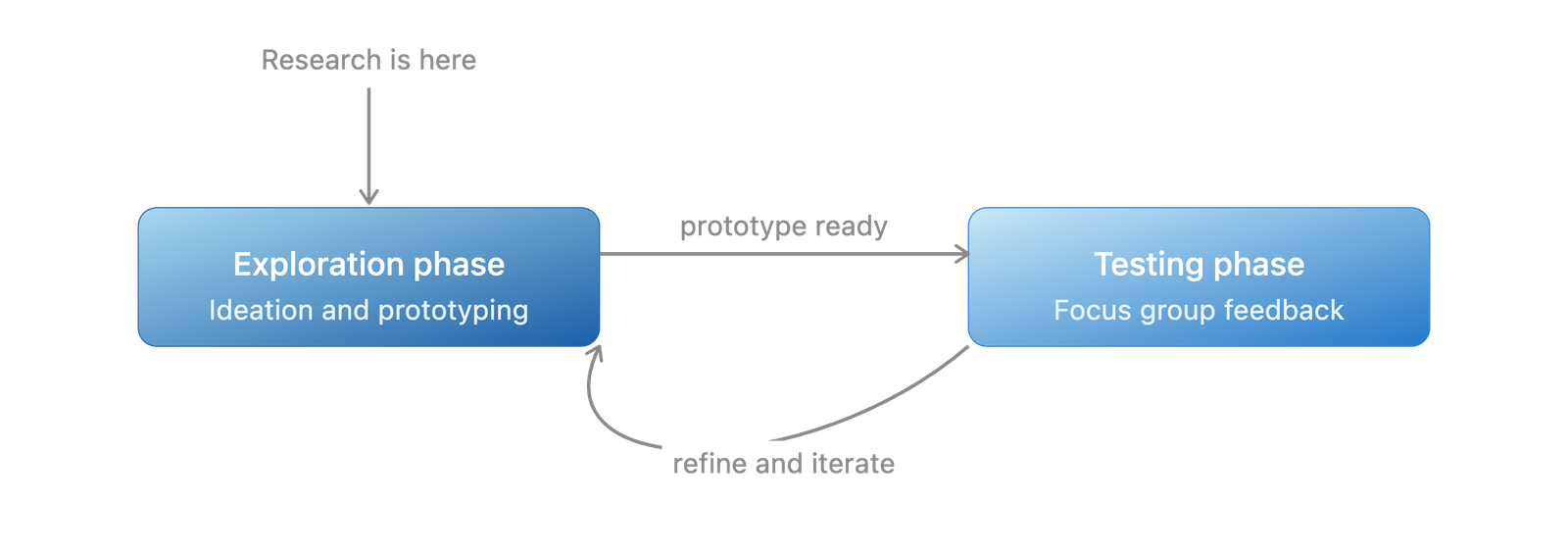
- Using user research to inform the content of the artwork. Running 3 x online focus groups with NHS staff to inform the practicalities and design of a near real-time data driven digital artwork in a hospital setting.
- Secondary research into empirical aesthetics, nature restoration research and biophilic design for informing the content and animation of the visuals in the artwork to increase wellbeing impact.
Artistic Context
Computational art inspiration comes from artists who treat data as material for affective experience, such as:
- Marina Zurkow's ecologically driven works - The River is a Circle (2022)
- Zheyuan Zhang's Flow installation at West Middlesex University Hospital (2025)
- Viegas & Wattenberg's Wind Map (2012), demonstrating how living datasets can be simultaneously analytical and aesthetic
I plan to implement a surrealist quality into the artwork drawing on the distorted temporality of Dalí's works and the dreamlike landscapes of Studio Six'n'Five, mapping surrealism's language of warped time onto the hospital experience — not to unsettle, but to afford reflection.
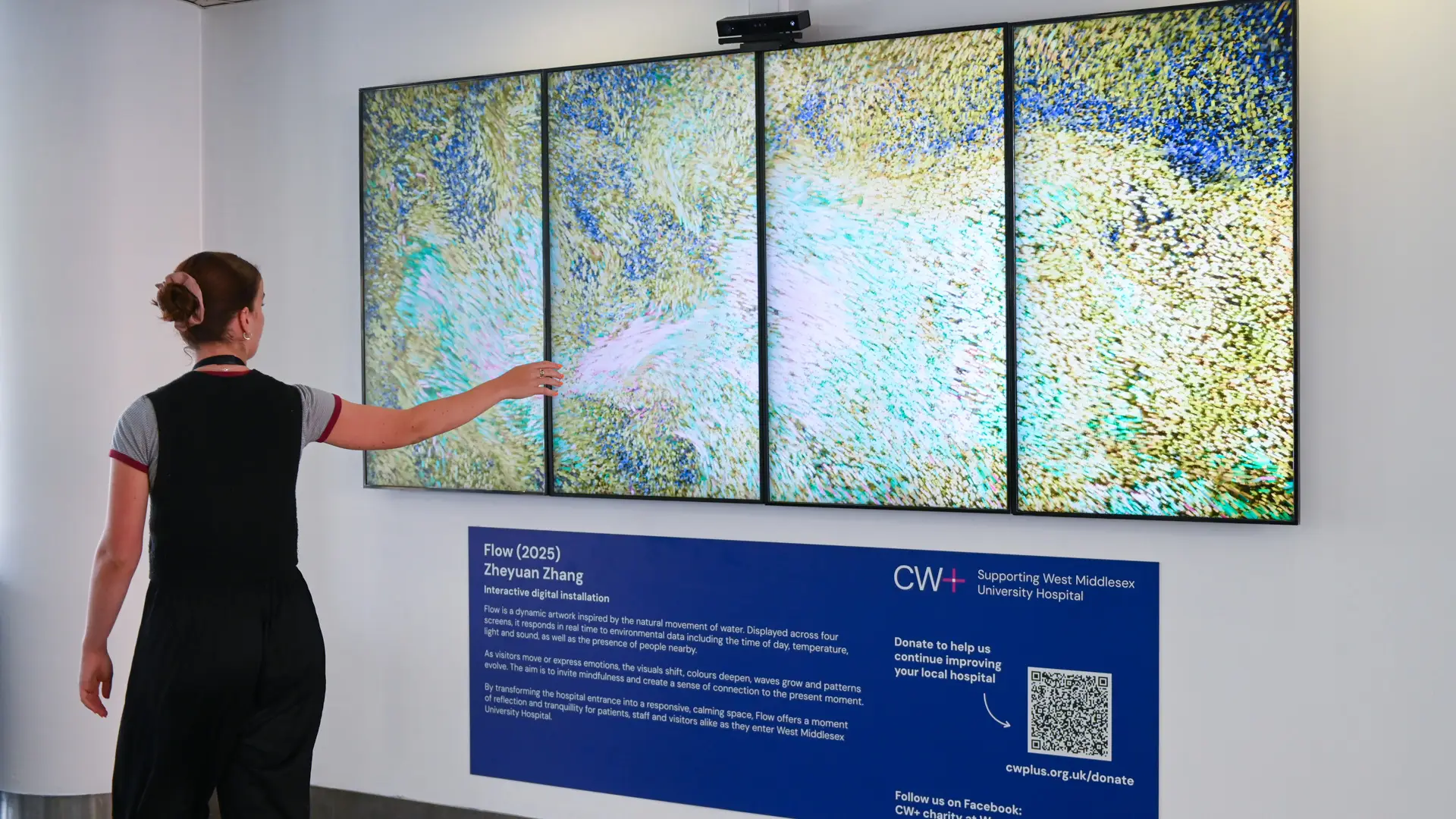
Flow (2025) — Zheyuan Zhang, West Middlesex University Hospital
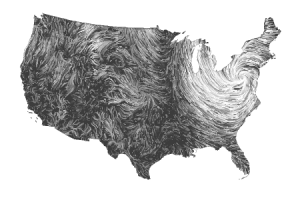
Wind Map (2012) — Viegas & Wattenberg
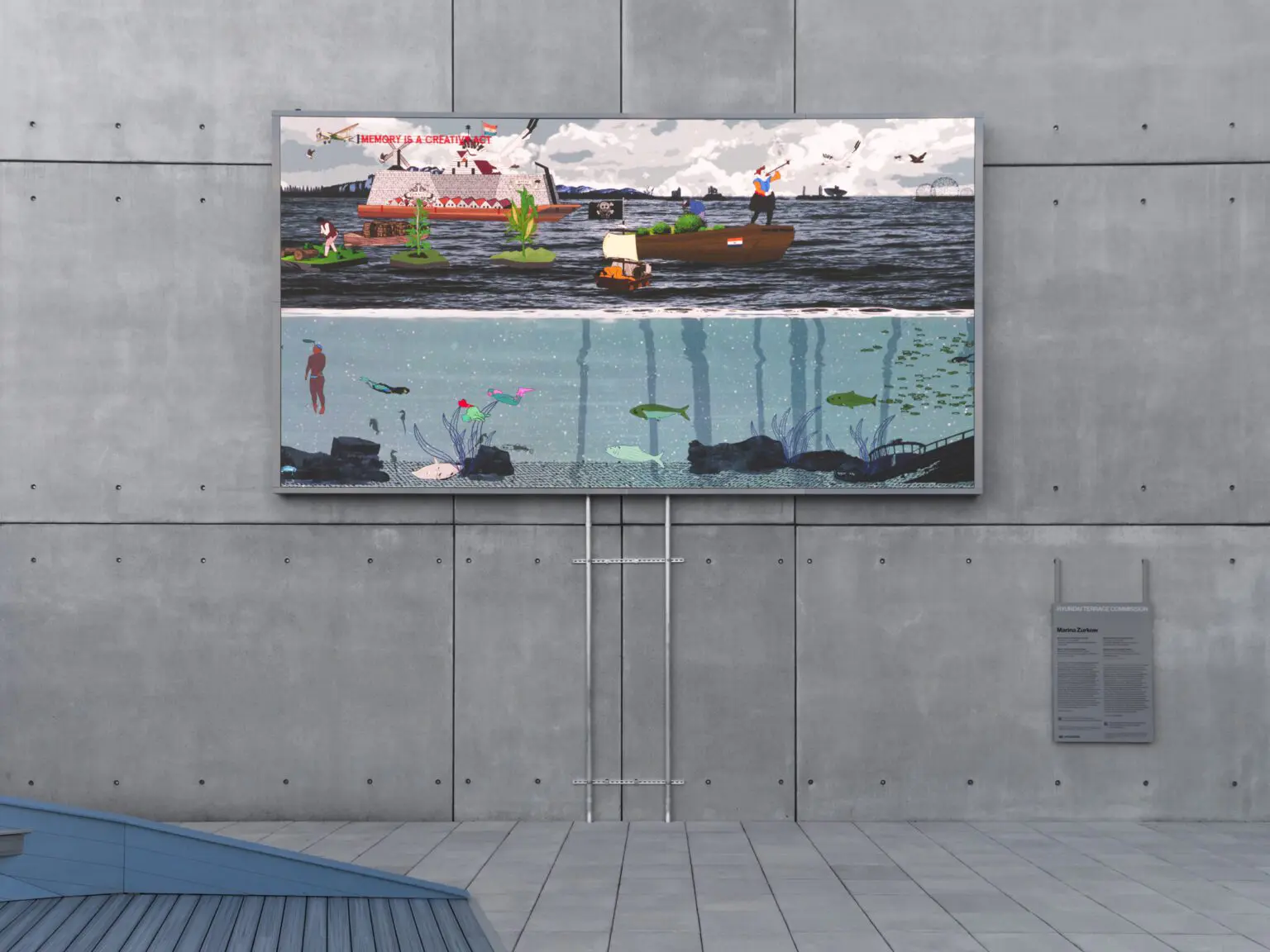
The River is a Circle (2022) — Marina Zurkow
Development Process
Community Research
Focus Group Discussion
A 1 hour 15 minute focus group discussion was conducted online via Teams in April 2026 with 6 health workers across departments at local South Wales hospitals. All participants had an interest or experience in initiatives promoting art within hospitals for wellbeing.
Participants
- Mental Health Services — 4 participants (including dementia services)
- Artificial Limb and Appliance Service — 1 participant
- Renal Care and Chronic Health — 1 participant
Findings
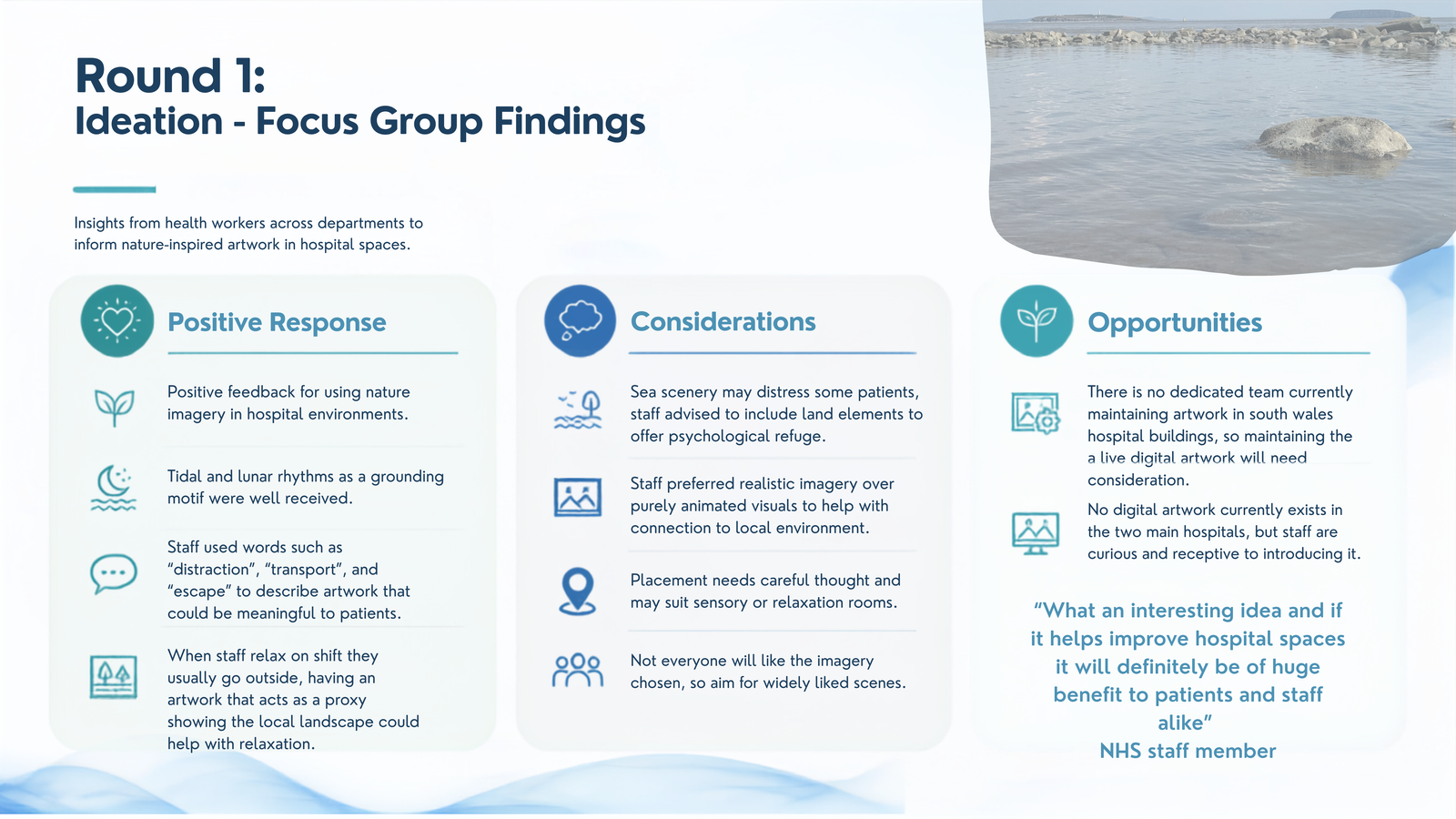
The 1st focus group and empirical aesthetics research both feed into the data driven art practice →
Empirical Aesthetics Research
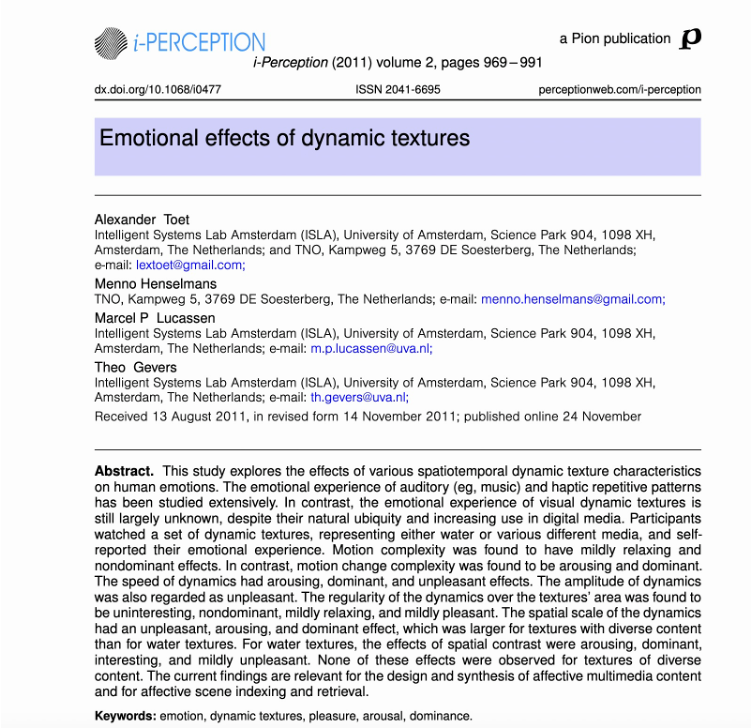
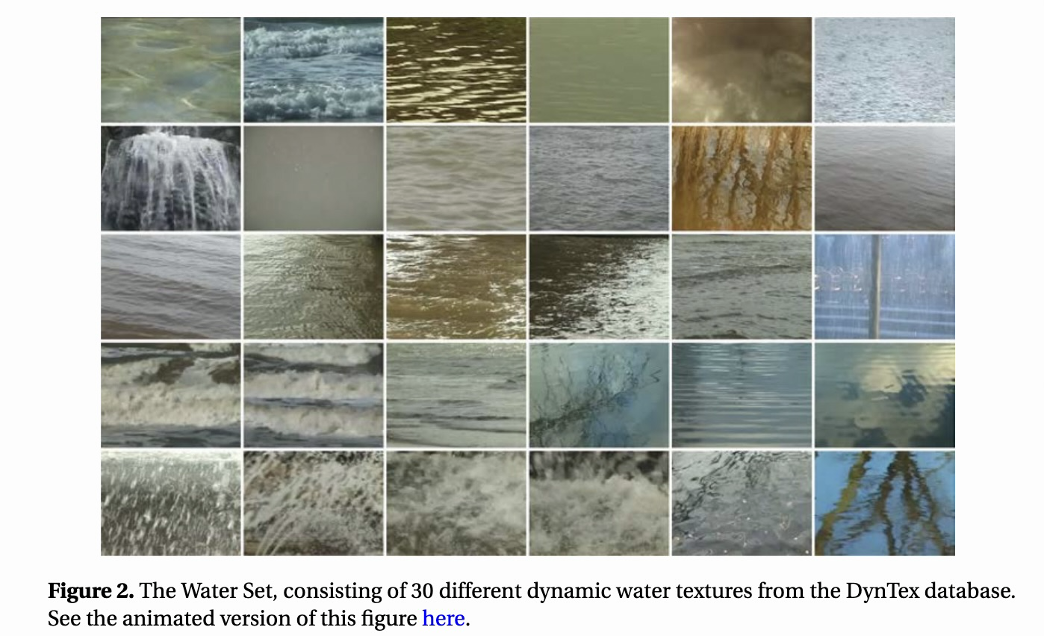
Secondary research into the effects of water movement and textures on human emotions informed the visual and motion parameters of the digital sea overlay.
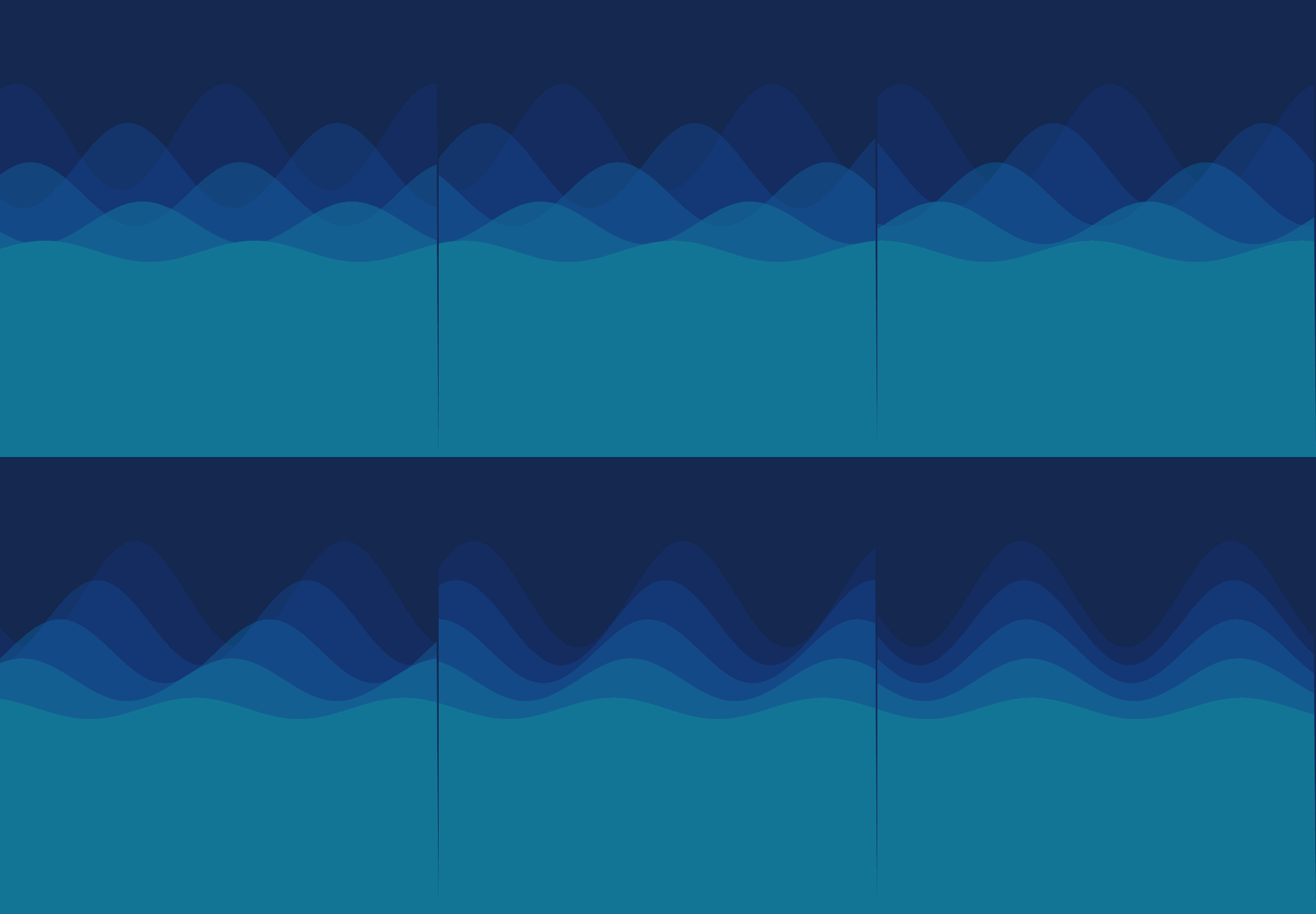
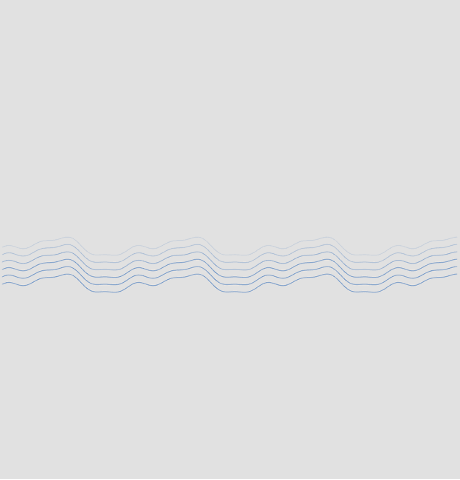
The Sea — Research Informed Movement - P5.js sketches (a coding language)
Amplitude: Toet et al (2011) found large wave amplitudes feel unpleasant to participants so wave amplitude is kept low across all weather conditions, with some differentiation for stormy vs calm conditions but wave amplitude will be capped even when stormy
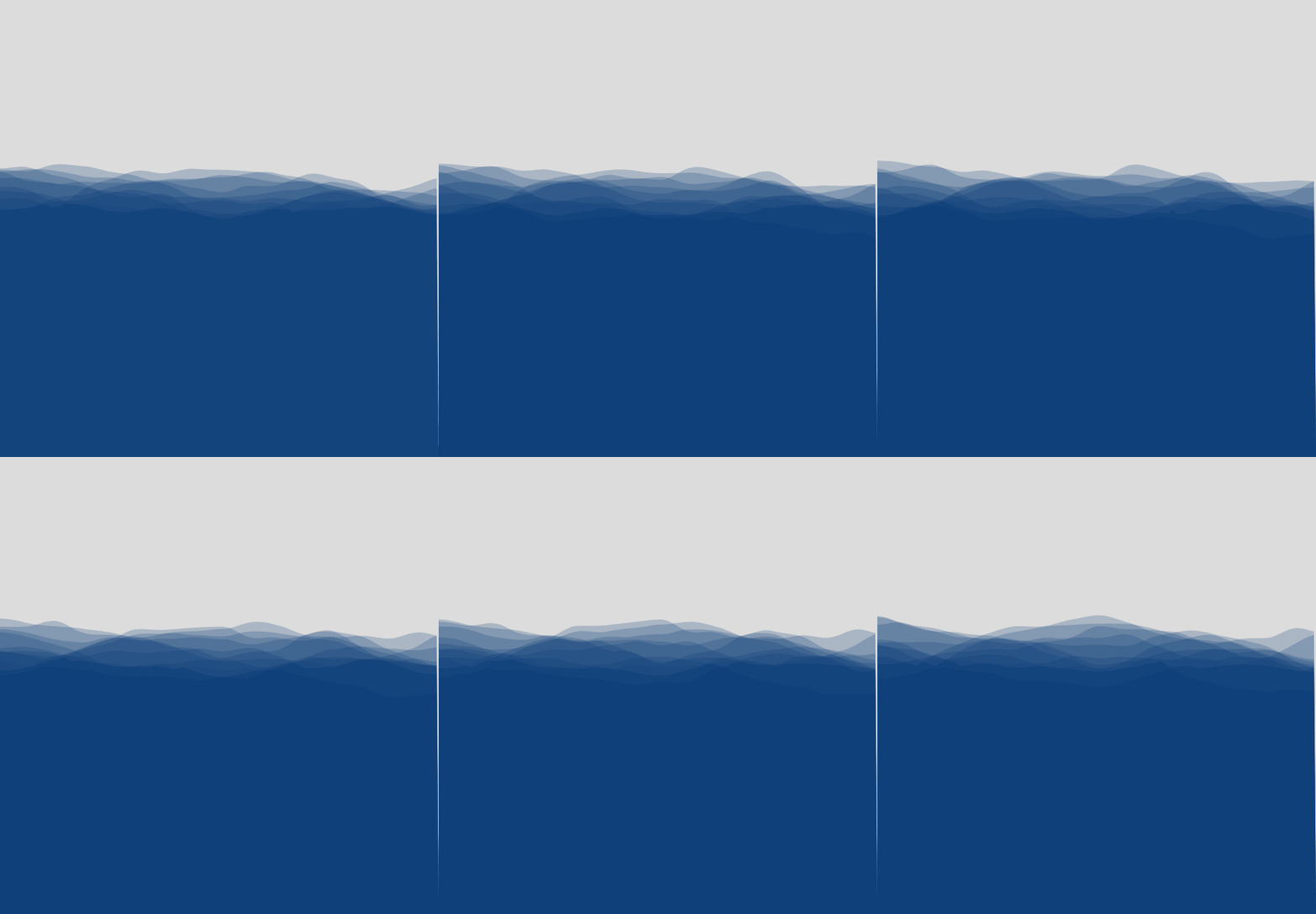
Perlin Noise and Layering: Toet et al (2011) found complex but organic motion with water is relaxing — using Perlin noise across layers creates uniform, organic motion simultaneously
Sine Waves: Toet et al (2011) found regular rhythmic motion is the most pleasant — multiple sine waves stacked at slightly different speeds and offsets achieve this
The wave motion parameters in these sketches are informed by the findings of a single paper (Toet et al., 2011). Further research will include a more comprehensive literature review to establish whether these findings are consistent across the broader empirical aesthetics literature.
Data Driven Art Practice
Direct observation and iterative computational experimentation informed each scene element in turn.
The Shoreline
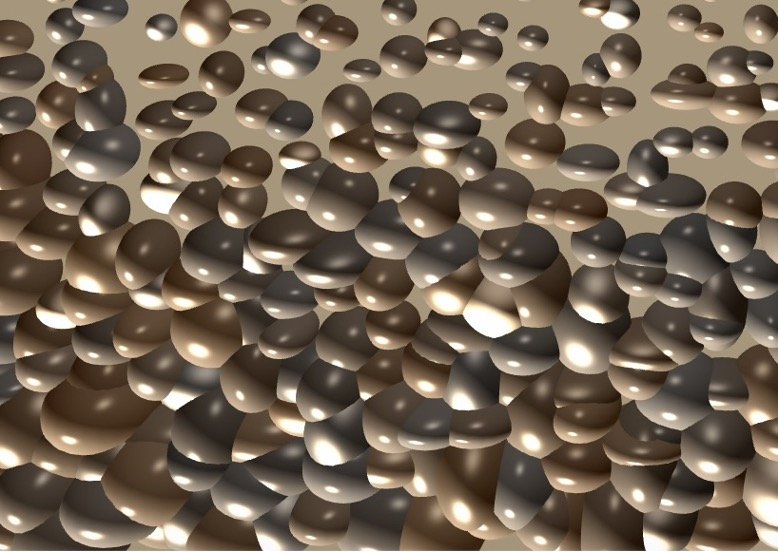
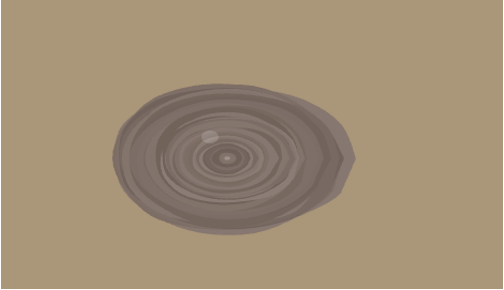
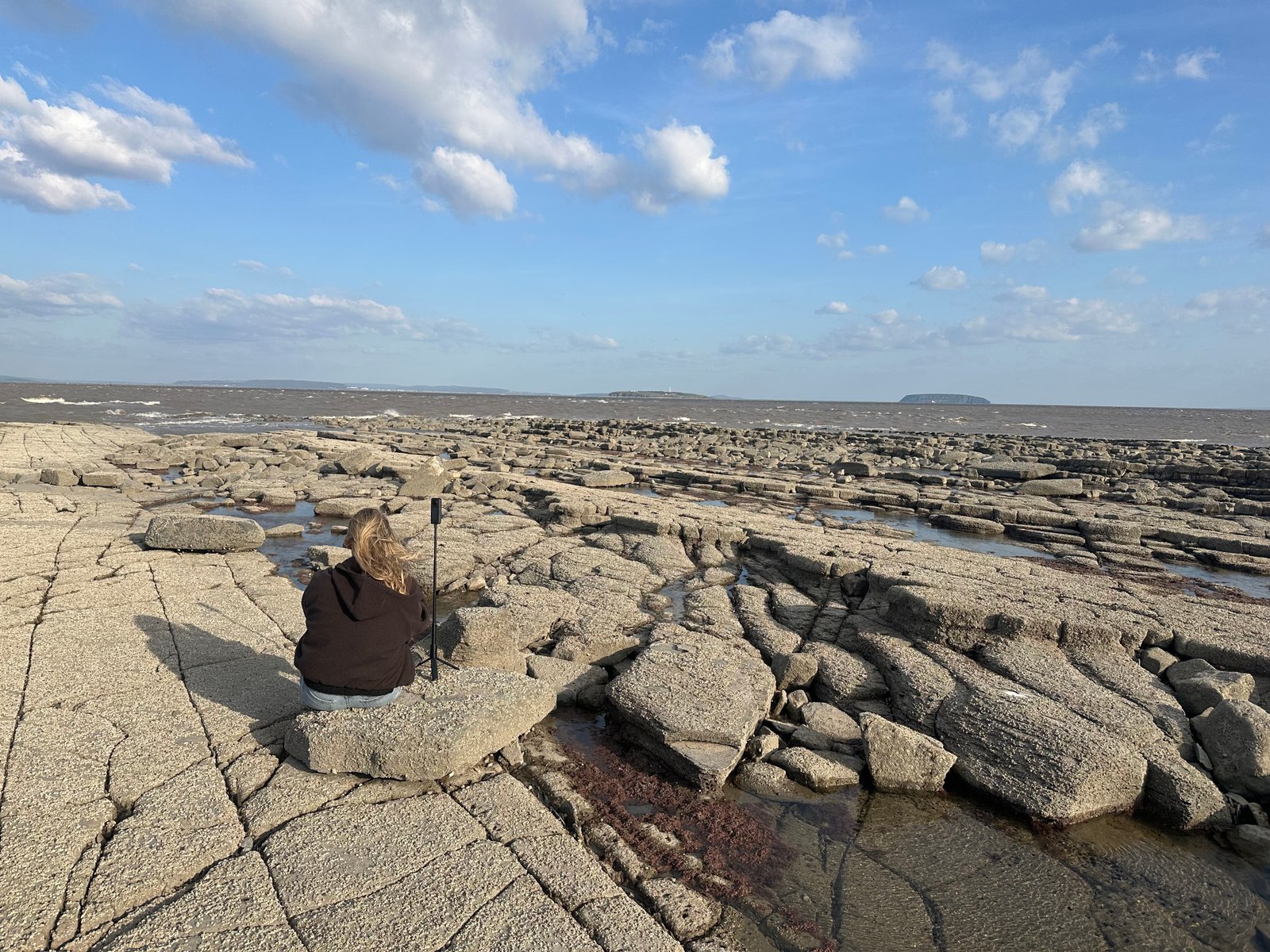
WebGL used to experiment with 3D pebble forms, then moved to 2D circular designs informed by focus group feedback on fractals, direct observational sketches, and beach photography.
The Moon
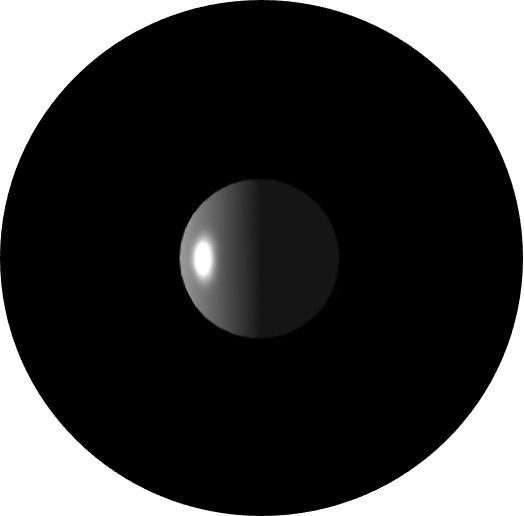
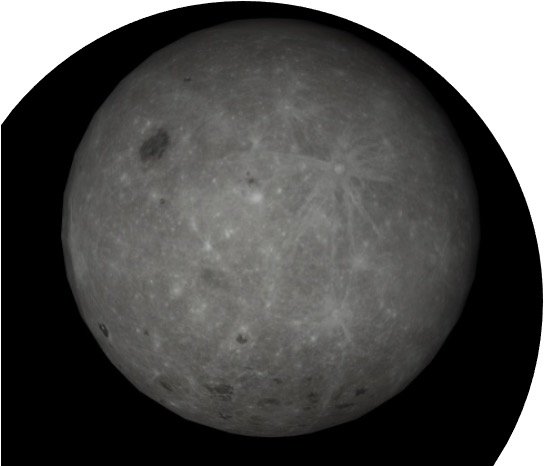
These sketches uses WebGL to render a 3D sphere representing the moon, adjusting the lighting strength and direction onto the sphere based on the current lunar phase. A picture of the moon from NASA is then used as texture across the sphere. Positioned using SunCalc astronomical library.
Digital Overlay
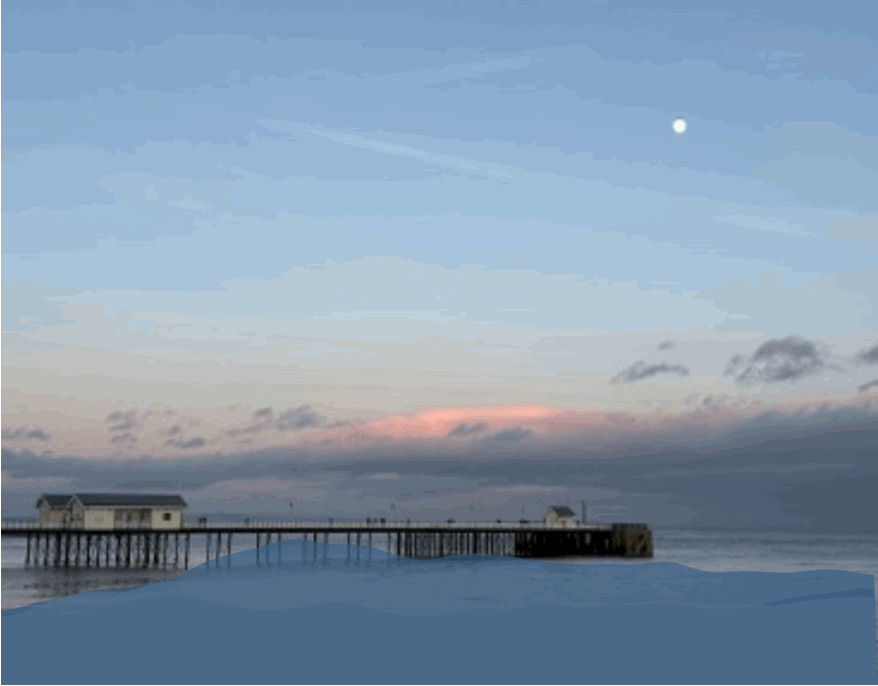
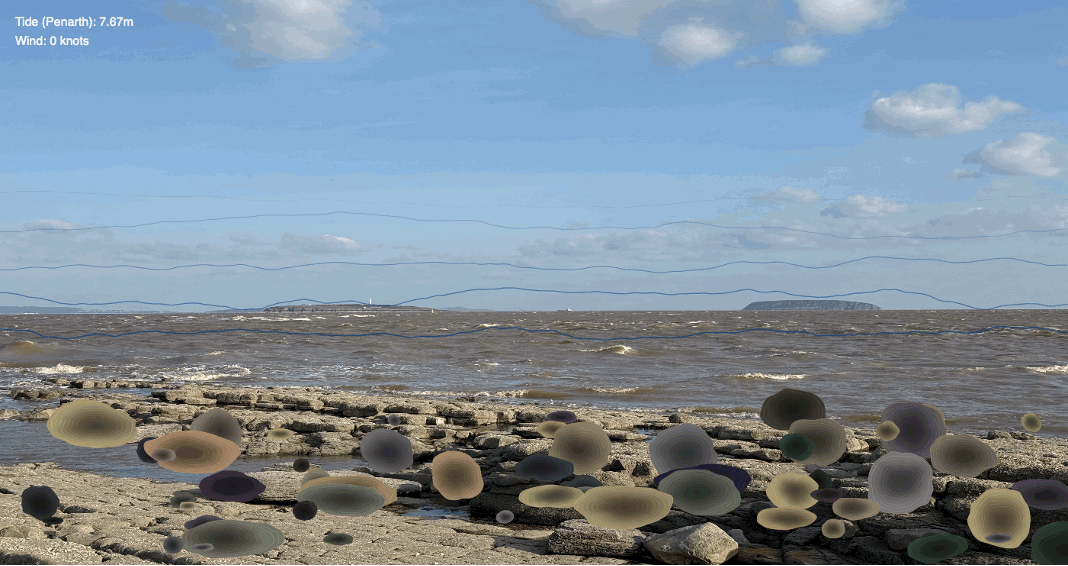
Experimenting with using photographs taken of the South Wales coast and creating a digital overlay of the sea controlled by real-time data. Based on focus group feedback, I moved from purely rendered forms to a more realistic visual style combining digital and real coastal landscape. I would ideally like to render more realistic looking sea without needing to use GPU due to constraints on how the artwork would be powered.
Early Prototypes
Live installation sketch — driven by real-time tidal, lunar and weather data from Penarth. Please allow a few seconds to load. This prototype is experimenting with mixed media - a real photograph of a viewpoint called Lavernock point which would be familiar to most people who live in cardiff/nearby due to two famous islands steepholme and flatholme being in shot.
Live Data Sources
- Coastal Monitoring API:
tideHeightControls how far the 'rendered water' covers the pebble beach. Low tide exposes the rocks, high tide submerges them. ;windSpeedScales wave movement speed and amplitude via windFactor. Stronger wind = faster, more active waves. Waves will never look too choppy to keep the relaxing nature of the scene. - Moon JSON:
phase_fractionSets the directional light angle on the 3D moon sphere so the lit/shadow side matches the real moon phase tonight. ,illumination_percentandmoon_namedrive the moon appearance - SunCalc Library:
azimuth + altitudepositions the moon as it would be seen from this viewpoint;getDaylight()drives the day/night sky gradient
Next Steps
Visual and Sound Development
- Experiment with shader-based water simulation - currently looks too cartoon-like
- Further literature review into the empirical aesthetics of wave movement
- Further literature review and practical exploration of fractal-based coastline designs — building on Salingaros (2012) to develop a shoreline that more closely mimics natural fractal complexity
- Develop more abstract prototypes exploring surrealist and generative approaches to the coastal landscape
- Collaborate with sonic artist Laura Selby to create a 24 hr live sound recording alongside the live visual
Research and Implementation
- Run two further focus groups with NHS staff to gather feedback on prototype artworks and anticipated impact on service users
- Investigate display hardware options — Samsung Frame Screen driven by Raspberry Pi ?
- Develop a plan for maintaining the artwork long-term within NHS settings, is there another way to show the artwork can it be shown on multiple screens?
- Explore funding opportunities through Arts Council, Wellcome, and Welsh NHS arts in health programmes
References
- Ulrich, R.S. (1984) 'View through a window may influence recovery from surgery', Science, 224(4647), pp. 420–421.
- Kaplan, S. (1995) 'The restorative benefits of nature', Journal of Environmental Psychology, 15(3), pp. 169–182.
- Salingaros, N.A. (2012) 'Fractal art and architecture reduce physiological stress', Journal of Biourbanism, 2(2), pp. 11–28.
- Toet, A. et al. (2011) 'Emotional effects of dynamic textures', i-Perception, 2, pp. 969–991.
- Dalí, S. (1931) The Persistence of Memory [Oil on canvas]. Museum of Modern Art, New York.
- Six N. Five (2021) Dreamscapes [Digital 3D artwork]. sixnfive.com
- Zurkow, M. (2022) The River Is a Circle [Digital artwork]. Whitney Museum of American Art, New York.
- Zhang, Z. (2025) Flow [Data-responsive installation]. West Middlesex University Hospital.
- Viegas, F. & Wattenberg, M. (2012) Wind Map [Living dataset visualisation]. hint.fm/wind
Status
Currently in progress as part of Computational Arts Masters study at Goldsmiths, University of London.